Steel Forging and Alloy Steel Forging
Forging is used to produce a wide range of shafts, gears, sprockets, and tools. As casting costs continue to rise, more customers are turning to forged parts as a stronger, more economical alternative to castings. For simpler shapes, forging combines low cost, high efficiency, and excellent internal soundness. Paired with precision machining, it delivers forged parts with superior strength and dimensional accuracy.
These parts serve a wide range of industries, including tooling, oil extraction equipment, and machinery components.
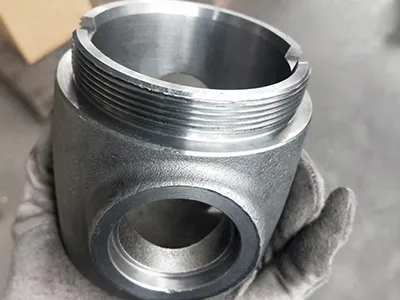
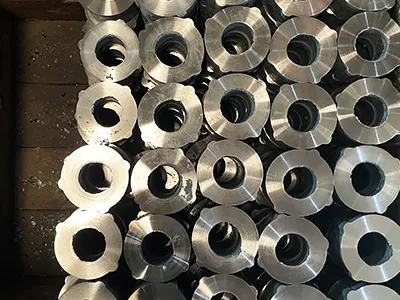
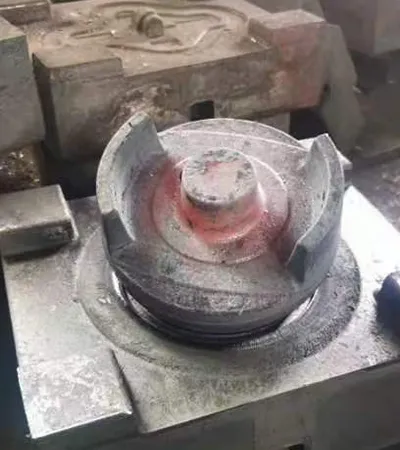 Pump Component (Closed-Die Forging)
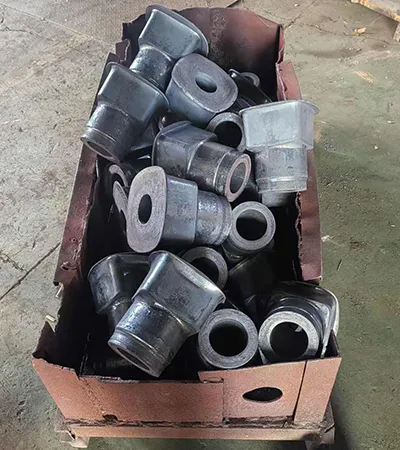 Pump Component (Closed-Die Forging)
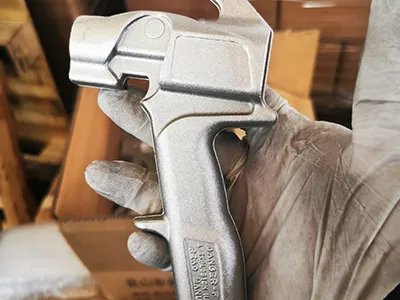
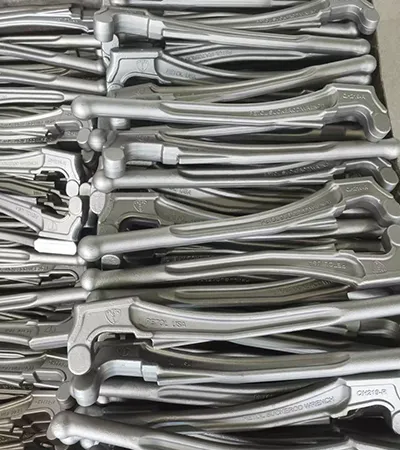 Tool Component (Closed-Die Forging)
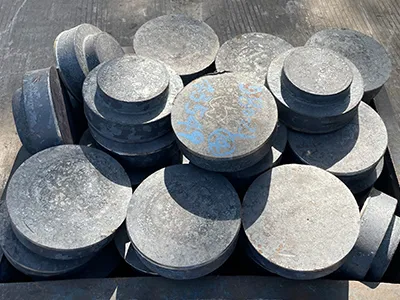
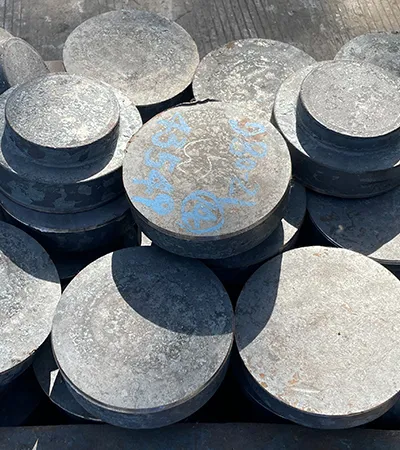 Sprocket Blank (Open-Die Forging)
- Carbon Steel
AISI/ASTM: 1020, 1045
EN: C22E (1.1151), C45E (1.1191)
JIS: S20C, S45C - Alloy Steel
AISI/ASTM: 4140, 4340
EN: 42CrMo4 (1.7225), 36CrNiMo4 (1.6511), 34CrNiMo6
JIS: SCM440, SNCM439 - Stainless Steel
AISI/ASTM: 304, 316, 316L, 410, 420
EN: 1.4301 (304), 1.4401 (316), 1.4404 (316L), 1.4006 (410), 1.4021 (420)
JIS: SUS304, SUS316, SUS316L, SUS410, SUS420J1
We can produce closed-die forgings with a minimum section thickness of 3-5 mm, linear dimensions ranging from 100 mm to 1,200 mm, and a maximum rotational diameter of 500 mm.
- Dimensional Tolerance: CT10-CT12
- Surface Roughness: Ra 6.3-25 μm
The main advantages of forging carbon steel and alloy steel are achieved by improving the material's microstructure.
- Optimized Grain Flow
Steel develops a fibrous grain structure during rolling. This process aligns the grain flow with the contour of the component, improving tensile strength and fatigue resistance in the direction of the load. - Reduction of Internal Defects
High forging pressures reduce internal shrinkage cavities, porosity, and looseness, resulting in a denser material structure that reduces the risk of leakage in high-pressure fluid systems. - Grain Refinement
Hot forging and subsequent cooling and heat treatment refine the grain structure, significantly enhancing the overall mechanical properties of the material.

- More than 30 years of manufacturing and export experience, with extensive knowledge of international logistics and industry-specific technical standards.
- Full support from tooling design and sample development through to high-volume production, precision machining, and surface treatment.
- A strict ISO 9001 quality management system, backed by CMM (coordinate measuring machine) inspection and non-destructive testing (MT, RT, PT).